


Smartphones have come a long way since the days of flip phones and those tiny screens that could barely display a text message. Now, they’re practically pocket-sized supercomputers that can do everything from ordering pizza to tracking your fitness goals. It’s hard to imagine life without them, but what’s next in this whirlwind of innovation?
Overview of Smartphone Innovation
Smartphone innovation represents a dynamic fusion of technology and design. Over time, devices evolved from basic models into multifaceted tools, equipped with advanced features including high-definition cameras, AI-driven applications, and augmented reality capabilities. Current smartphones integrate machine learning algorithms, enhancing user experience and personalization.
Manufacturers explore various materials and ergonomics to improve device durability and aesthetic appeal, with trends shifting towards foldable screens and lightweight designs. Battery technology continues to advance, offering longer-lasting power through higher-capacity lithium-ion batteries and rapid charging solutions.
5G technology significantly boosts smartphone performance, providing faster download speeds and improved connectivity. As a result, users can enjoy seamless video streaming, cloud gaming, and real-time communication without interruptions.
Security features grow more sophisticated, with biometric recognition methods such as facial recognition and fingerprint scanning safeguarding sensitive information. Additionally, privacy measures now include built-in security software that detects potential risks to personal data.
Smartphones now serve multifarious roles. They function as fitness trackers, health monitors, and even personal finance managers. Wireless charging capabilities and ecosystem integration enhance compatibility with smart home devices and wearables.
Innovative applications in educational technology further empower users to learn and engage through interactive tools. The demand for e-commerce solutions fosters creativity in mobile payment options, facilitating secure transactions.
Anticipations for future advancements include artificial intelligence for smarter automation, improved battery technologies, and expanded functionalities for augmented reality applications. Smartphone innovation shows no signs of slowing, promising exciting developments that will redefine user interaction in the years ahead.
Key Technologies Driving Innovation
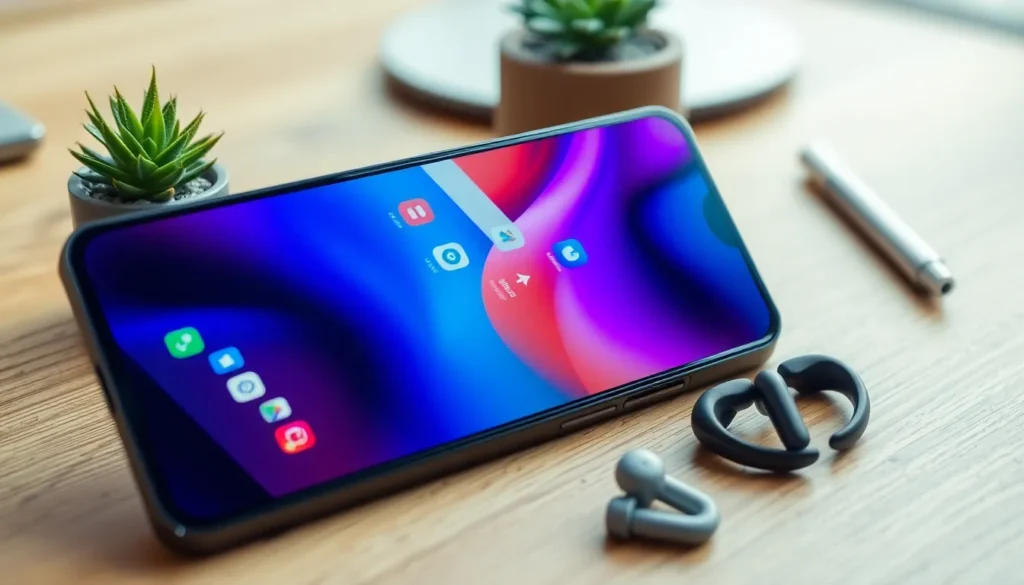
Smartphone innovation revolves around several key technologies that enhance functionality and user experience.
Artificial Intelligence and Machine Learning
Artificial intelligence plays a crucial role in optimizing smartphone applications. Machine learning algorithms analyze user behavior to provide personalized experiences, such as predictive text and camera enhancements. These technologies adapt to user preferences, improving performance over time. Virtual assistants leverage AI to manage tasks, making devices more intuitive. Businesses integrate AI in customer service applications, resulting in improved user satisfaction and support efficiency.
5G Connectivity
5G technology revolutionizes how smartphones connect to the internet. Enhanced bandwidth allows for faster download and upload speeds, supporting data-intensive applications like video streaming and cloud gaming. Latency reduction boosts real-time applications, benefiting activities like online gaming and video conferencing. Improved connectivity supports seamless experiences with smart home devices, allowing users to control their environments from their smartphones. The widespread rollout of 5G networks continues to create opportunities for new innovations.
Foldable and Flexible Displays
Foldable displays introduce versatility in smartphone design. These innovative screens enable compact devices to unfold into larger displays, enhancing multimedia experiences. The technology allows manufacturers to create phones that combine the portability of smartphones with the functionality of tablets. Flexible displays open up new possibilities for user interaction and ergonomic designs. Companies are exploring various form factors, indicating a shift toward more adaptive and creative device designs.
Impact of Smartphone Innovation on User Experience
Smartphone innovation significantly enhances user experience across various aspects. Users benefit from improved functionalities that simplify everyday tasks and enrich interactions.
Improved Camera Systems
High-quality camera systems are central to smartphone innovation. Leading brands now incorporate multiple lenses, enabling users to capture high-definition photos and videos from various angles. AI technology enhances photography, providing features like night mode and portrait effects. Additionally, mobile photography apps offer editing tools that elevate image quality. Users enjoy seamless sharing capabilities across social media platforms, making photography a vital aspect of user engagement. As smartphones continue to evolve, expectations for camera performance rise, setting new standards for mobile photography.
Enhanced Battery Life
Enhanced battery life directly impacts user satisfaction and convenience. Modern smartphones utilize higher-capacity lithium-ion batteries and intelligent power management systems. Fast charging technology ensures users can quickly recharge devices, minimizing downtime. Battery-saving modes extend usage periods without sacrificing performance. Consumers appreciate features that allow them to customize power usage, prolonging device longevity. Such advancements empower users to rely on smartphones for extended periods, improving overall functionality and convenience for daily activities.
Future Trends in Smartphone Innovation
Smartphone innovation continues to evolve rapidly. Key trends include augmented reality, virtual reality, and eco-friendly technologies.
Augmented Reality and Virtual Reality
Augmented reality (AR) and virtual reality (VR) are set to enhance user engagement significantly. Devices equipped with AR capabilities provide immersive experiences that blend digital content with the real world. Industries such as gaming, education, and retail leverage these technologies to offer interactive features. Major brands invest in AR applications to improve navigation through spatial awareness, while VR creates entirely immersive environments for entertainment and training. Future smartphones might include enhanced sensors and displays to bring innovative AR and VR experiences to everyday use.
Sustainable and Eco-Friendly Technologies
Sustainability drives innovation in smartphone design and manufacturing. Increasingly, manufacturers adopt eco-friendly materials, reducing reliance on plastics and promoting recyclable components. Energy-efficient production methods also become a priority, minimizing the overall carbon footprint. Battery technologies evolve to utilize sustainable resources, enhancing recyclability and safety. As consumers demand greener options, smartphone companies respond by integrating these practices into their product lines, ensuring long-term environmental benefits. Future models may emphasize longevity through modular designs that facilitate easy repairs, ultimately reducing electronic waste while meeting growing consumer expectations for sustainability.
Smartphone innovation is reshaping how people interact with technology and the world around them. As devices become increasingly sophisticated and versatile, they not only enhance daily life but also pave the way for a more connected future. The integration of advanced technologies like AI and 5G is driving user experiences to new heights while ensuring that sustainability remains at the forefront of design.
Looking ahead, the potential for augmented reality and modular devices promises exciting developments that cater to evolving consumer needs. With a focus on durability and eco-friendliness, the smartphone landscape is set to transform further, reinforcing its role as an indispensable tool in modern life. As innovation continues to thrive, users can expect their smartphones to become even more integral to their daily routines and overall well-being.